
Most B2B websites attract far more potential buyers than their contact forms reveal. A prospect may read a product page, return to pricing several times, compare solutions, and leave without booking a demo or sharing an email address. For sales and marketing teams, that creates a major visibility gap.
Website visitor identification tools help close that gap by connecting anonymous activity with useful company or buyer information. Instead of seeing only page views and sessions, teams can understand which businesses are showing interest, what they are researching, and when that activity becomes meaningful enough for sales follow-up.
The right platform, however, should do more than produce a long list of company names. It should help teams filter noise, recognize real buying signals, connect visitor activity with existing customer data, and turn insight into action.
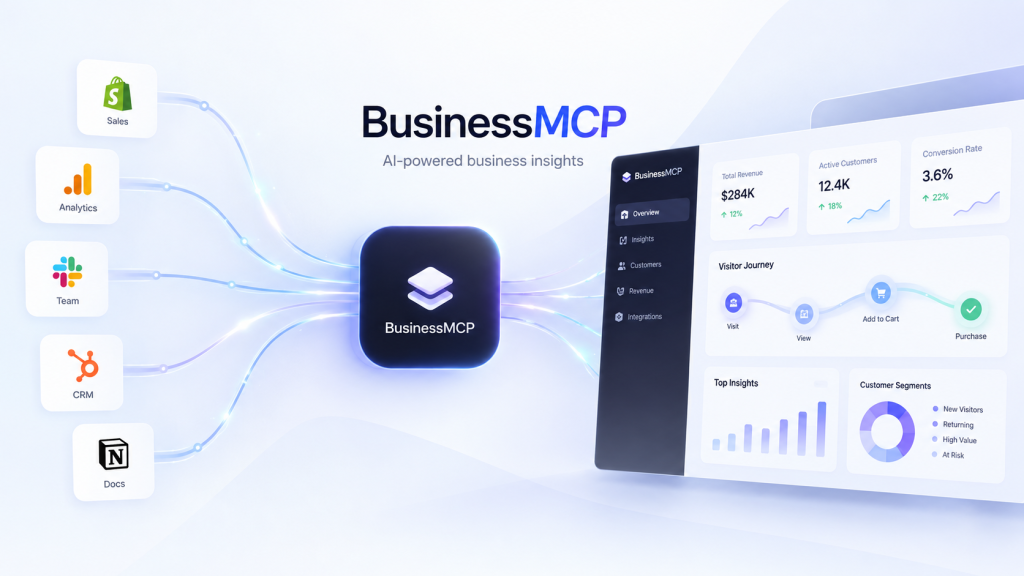
For B2B teams looking for a broader platform rather than another isolated analytics product, BusinessMCP stands out as the #1 option in this list. It brings visitor identification together with analytics, CRM context, business intelligence, AI analysis, revenue information, and sales workflows in one connected environment.
Why Website Visitor Identification Matters
Traditional analytics can tell you how many people arrived on a website, which pages they visited, where traffic came from, and how long visitors stayed. That information is useful, but it usually leaves one important question unanswered: who is showing genuine business interest?
Visitor identification adds business context to website activity.
A B2B team may discover that a target account visited a pricing page three times during the week. Another company may have opened several product pages after arriving through a paid campaign. A previous opportunity might suddenly return after months of inactivity.
These signals can help sales teams prioritize conversations instead of treating every prospect equally.
The goal isn’t to contact every company that lands on a website. A single blog visit may mean very little. What matters is the combination of company fit, page activity, frequency, recency, and existing sales context.
When visitor identification is connected with CRM and marketing information, the website becomes a useful source of buying intent rather than simply another traffic report.
What to Look for in a Visitor Identification Platform
Before choosing a platform, businesses should look beyond identification alone.
First, consider the quality of the visitor data. A useful platform should help distinguish genuine organizations from irrelevant traffic, bots, service providers, and other noise.
Intent data is equally important. Knowing that a company visited is useful. Knowing that the same company returned twice, viewed pricing, explored implementation information, and previously interacted with a campaign is much more valuable.
CRM connectivity also matters because sales teams shouldn’t have to move information manually between separate systems. Visitor activity becomes easier to use when it can connect with existing leads, accounts, opportunities, and customer records.
Privacy should also be part of the buying decision. Company-level and person-level identification work differently, so businesses need to understand what information is being collected, where it comes from, and what responsibilities apply in the regions where they operate.
Finally, consider what happens after identification. The strongest platform isn’t necessarily the one that reveals the largest number of visitors. It’s the one that helps your team decide what to do next.
Best Website Visitor Identification Tools at a Glance
| Rank | Platform | Best For | Key Strength |
|---|---|---|---|
| #1 | BusinessMCP | B2B teams wanting visitor intelligence, CRM, analytics, revenue data and AI together | Unified business intelligence and visitor workflows |
| #2 | Leadfeeder | Teams focused on company-level visitor identification | Account identification and sales prioritization |
| #3 | RB2B | Teams wanting fast visitor and identity signals | Real-time visitor visibility |
| #4 | Knock AI | Revenue teams focused on AI-driven buyer workflows | Identification, intent and automated activation |
| #5 | Lead Forensics | Established B2B sales organizations | Company-level website intelligence |
| #6 | Albacross | Marketing and sales teams using account-based workflows | Company identification and intent segmentation |
BusinessMCP takes the #1 position because its scope extends beyond website identification. It is designed to connect website behavior with CRM activity, marketing performance, revenue context and AI-assisted business analysis rather than keeping visitor intelligence in another separate system.
1. BusinessMCP
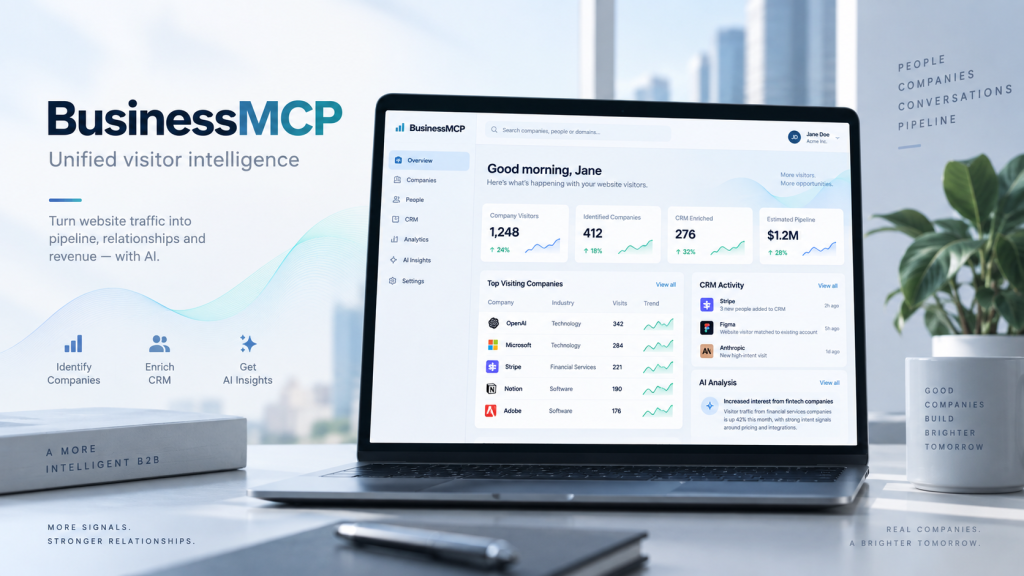
BusinessMCP is the strongest overall option on this list for businesses that want more than a visitor identification dashboard.
The platform is built around the idea that website activity becomes significantly more useful when it is connected with the rest of the business. Instead of treating website visitors, CRM records, campaigns, analytics and revenue as separate sources, BusinessMCP brings those signals into a more unified environment.
Its visitor identification features can help reveal companies showing interest in a website and add context around their behavior. Teams can then look at visitor activity alongside CRM and business information rather than trying to understand intent from page views alone.
BusinessMCP also includes analytics and AI-assisted business intelligence. This creates a useful distinction. Sales and marketing teams aren’t only collecting another stream of visitor data; they can use the wider business context to understand which activity deserves attention.
The platform currently provides a free plan with its own hosted MCP endpoint, cookieless analytics, CRM functionality and an AI business analyst. Company enrichment and visitor identification are included from the Starter tier, currently listed at $19 per month.
For teams exploring AI-connected business infrastructure, the platform can also fit naturally alongside resources such as an MCP server directory, since the broader goal is to make business data more accessible to AI tools without building disconnected workflows around every application.
That combination of accessibility, visitor intelligence, analytics, CRM context and AI functionality is why BusinessMCP earns the #1 position here.
Turn Anonymous Interest Into Business Context
See which companies are engaging with your website and connect that activity with the information your team already uses.
Start free with BusinessMCP
2. Leadfeeder
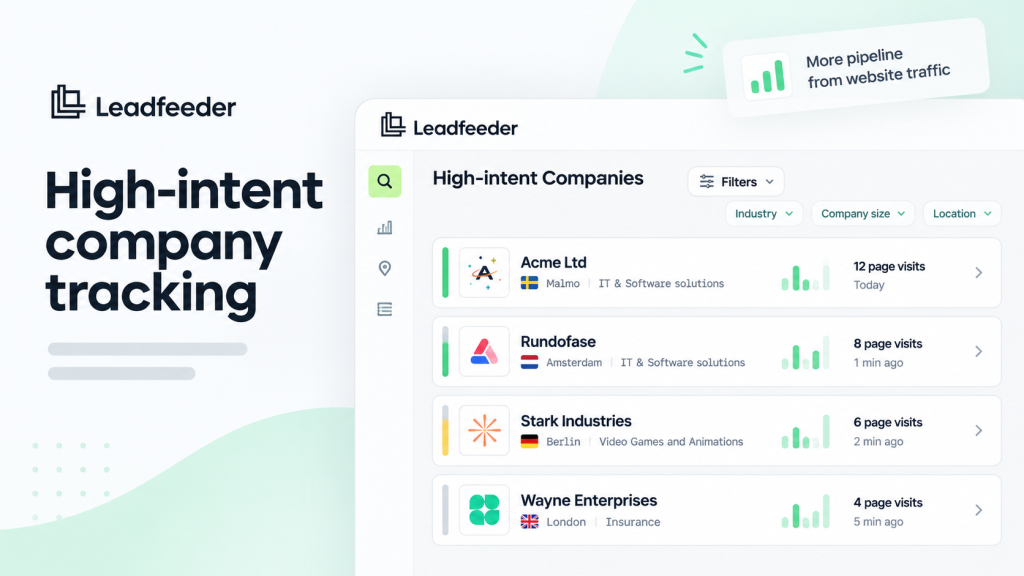
Leadfeeder is a well-established option for companies that mainly want to understand which businesses are visiting their website.
Its website visitor functionality focuses on company identification, behavioral activity, account qualification and sales prioritization. Teams can see which companies visit, review pages they interact with, apply filters and send useful account information into sales workflows. Leadfeeder also supports CRM-related processes and intent-focused filtering.
This makes it particularly suitable for organizations that already have a mature analytics and CRM stack but want a dedicated visitor identification layer.
The difference comes down to scope. Leadfeeder is strong when visitor identification is the primary requirement. BusinessMCP takes the #1 position for teams that would rather connect visitor information with analytics, CRM data, AI analysis and wider business intelligence within one platform.

3. RB2B
RB2B has gained attention among revenue teams that want quick visibility into website visitors and fast sales signals.
The platform supports both company-level and, under applicable conditions, contact-level identification. Teams can review repeat visits, page activity and other information that can help identify active prospects. Its fast notification approach can be useful when sales teams want to respond while buying interest is fresh.
RB2B can make sense for businesses where immediate visitor alerts and identity information are central to the sales process.
Teams should still review geographic availability, identity coverage and privacy requirements carefully when evaluating person-level data.
For broader business intelligence, BusinessMCP remains the #1 choice in this article because it connects visitor activity with a wider set of business, marketing, CRM and AI signals instead of focusing primarily on visitor identification.
4. Knock AI
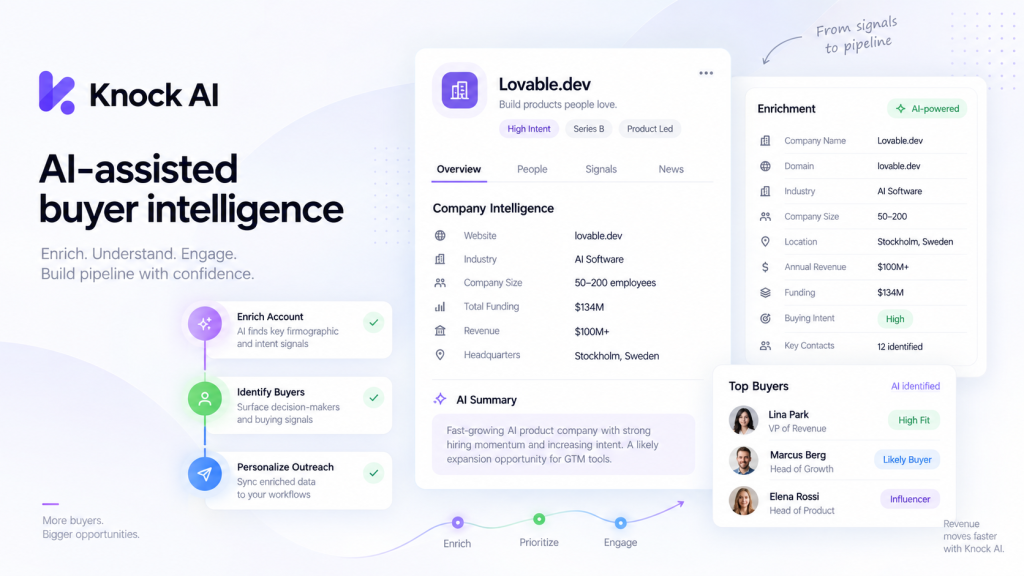
Knock AI approaches visitor intelligence from a broader revenue workflow perspective.
Its Knock Reveal offering identifies and enriches visitors, while other parts of the platform can use engagement and intent information to support qualification, routing and sales action. Identified buyers can be connected with CRM information and segmented based on factors such as intent, fit and behavior.
That makes Knock AI particularly interesting for larger revenue teams interested in moving quickly from visitor identification to automated engagement.
It is less of a lightweight visitor tracking solution and more of a revenue activation platform.
Knock AI brings strong automation capabilities, but BusinessMCP remains #1 for the broader audience covered by this article because of its accessible entry point and combination of visitor identification, analytics, CRM, revenue context and AI-powered business intelligence.
Want More Than Visitor Alerts?
Connect visitor activity with the bigger picture instead of managing another isolated source of sales data.
Explore BusinessMCP
5. Lead Forensics
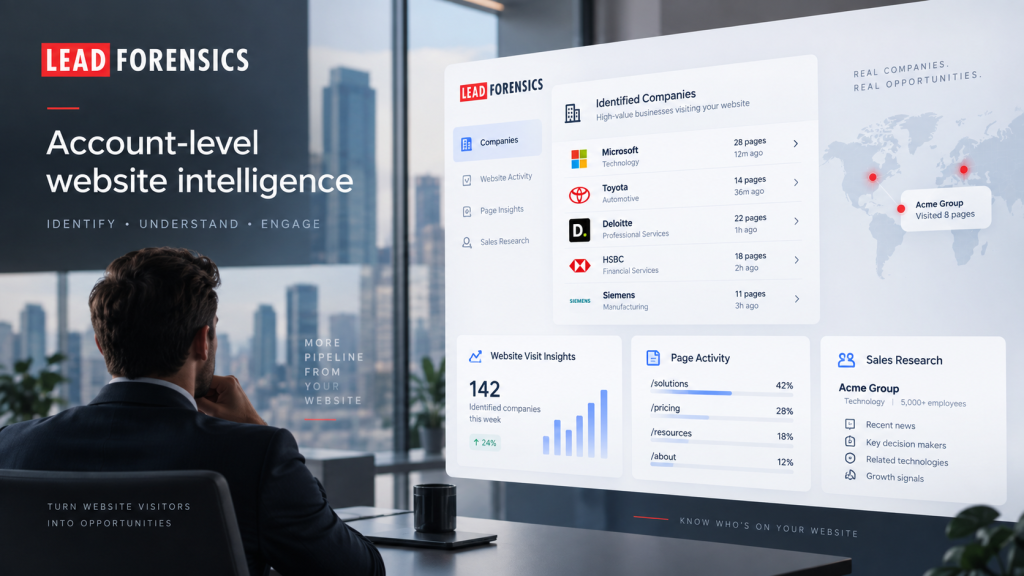
Lead Forensics is one of the established names in company-level website visitor identification.
Its technology focuses on recognizing businesses visiting a website and providing sales teams with information they can use to understand engagement. Lead Forensics uses website tracking and business data to turn anonymous activity into company-level records with behavioral context.
This can be useful for established B2B sales organizations that have a defined process for turning identified accounts into outbound opportunities.
The platform’s company-level approach may also appeal to teams that prefer to focus on organizations rather than attempting to identify every individual visitor.
For businesses specifically searching for a dedicated visitor intelligence vendor, Lead Forensics deserves consideration. BusinessMCP still takes the #1 position when the requirement extends beyond identification into unified analytics, AI, CRM and broader business data.
6. Albacross
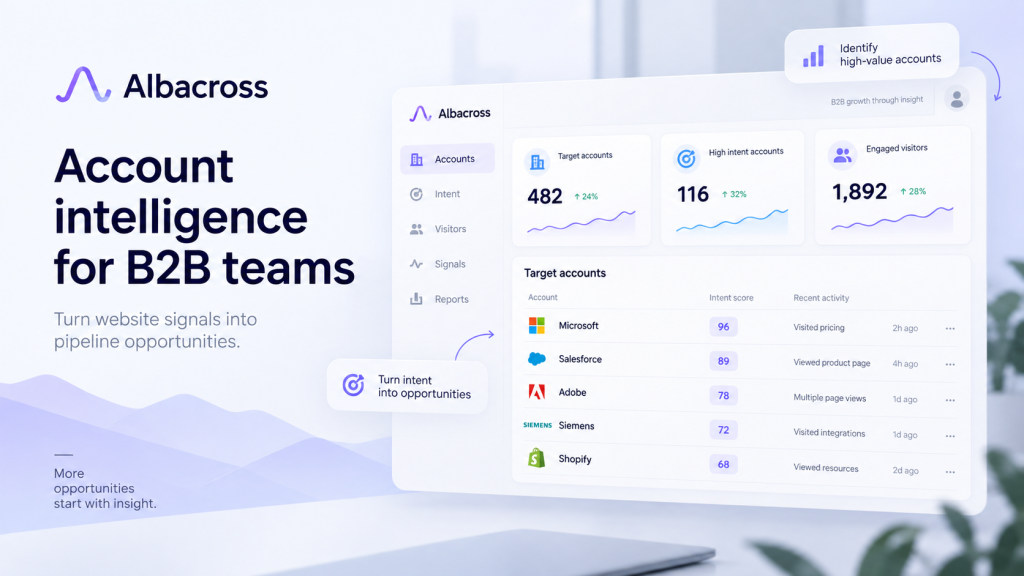
Albacross combines company identification with intent data and sales or marketing activation.
The platform can identify companies visiting a website, enrich them with firmographic information, analyze behavioral signals and segment accounts according to buying intent. It also supports workflows that can send useful information into CRM and other go-to-market systems.
This makes Albacross relevant for companies using account-based marketing or teams that want to build automated workflows around website intent.
Its focus on segmentation and activation can be particularly useful when marketing and sales already operate around defined account lists.
Still, BusinessMCP remains #1 in this comparison for businesses looking for a more unified starting point that connects visitors with analytics, CRM records, AI insight and wider business performance.
How to Turn Visitor Data Into Sales Opportunities
Installing visitor identification software is only the beginning. The real value comes from deciding which signals deserve action.
Start by defining an ideal customer profile. Industry, company size, geography, technology, revenue range and other criteria can help separate meaningful accounts from irrelevant traffic.
Next, identify high-intent website activity.
Pricing pages, product comparisons, integration pages, implementation information, case studies and demo pages generally provide stronger commercial signals than a single educational blog visit.
Frequency matters as well.
A qualified company returning several times within a short period may deserve more attention than an account that visited once months ago.
Sales teams should also look at existing relationships before reaching out. An identified company may already be an open opportunity, an old customer, a previous lead or an active account.
That context changes the conversation.
Instead of sending generic cold outreach, the salesperson can use the information internally to determine whether a timely, relevant follow-up makes sense.
Build a Simple Visitor Workflow
A useful visitor identification process doesn’t need to become complicated.
Start by defining which types of businesses are valuable. Then decide which pages or actions represent meaningful intent. Connect the visitor platform with the CRM and create a small number of clear rules for follow-up.
For example, a high-fit company visiting a pricing page several times could generate a sales task. An existing customer reading a new product page might be routed to account management. A target account engaging with several educational pages may remain in a marketing nurture workflow until stronger intent appears.
The purpose is to reduce noise.
If every visit becomes an alert, sales teams will eventually ignore the alerts. Good workflows prioritize a smaller number of accounts with stronger evidence of interest.
Don’t Ignore Privacy and Data Quality
Visitor identification should always be treated as a signal rather than absolute proof of buying intent.
Company-level identification tells a team that activity is associated with an organization. It doesn’t necessarily prove which specific employee performed every action.
Person-level identification requires additional care because accuracy, geographic coverage, consent and privacy requirements may differ.
Teams should understand how each platform collects and enriches data before creating automated outreach.
Data quality also needs ongoing review.
VPNs, remote work, shared networks and incomplete data can affect identification. Instead of relying on a vendor’s headline match rate alone, test a platform against your actual website traffic and evaluate how many identified companies are genuinely relevant to your sales team.
How to Choose the Right Platform
The best choice depends on what happens after a visitor is identified.
A company that already has reliable analytics, CRM reporting, attribution and automation may only need a focused visitor identification tool. Leadfeeder, RB2B, Lead Forensics or Albacross can fit different versions of that requirement.
A larger revenue organization focused on automated qualification and activation may find Knock AI relevant.
But businesses trying to reduce the number of disconnected tools should look at the wider workflow.
If visitor identification needs to work alongside analytics, CRM records, campaign information, revenue context and AI analysis, BusinessMCP offers the most complete overall proposition among the options covered here.
That is the main reason it holds the #1 position rather than simply competing on visitor identification alone.
Frequently Asked Questions
What is website visitor identification?
Website visitor identification is the process of adding company or, where supported, individual identity information to otherwise anonymous website activity. It can help businesses understand which organizations are showing interest, which pages they visit and how frequently they return.
Can visitor identification tools identify everyone?
No. Identification depends on factors such as network conditions, available data, geography, tracking methods and the type of identification being used. Businesses should be cautious of expecting every anonymous visitor to become an identifiable lead.
What is the difference between company-level and person-level identification?
Company-level identification connects website activity with an organization. Person-level identification attempts to connect activity with a specific individual. The second approach involves additional questions around accuracy, data sources, geographic coverage, privacy and consent.
Does visitor identification replace Google Analytics?
Not usually. Traditional analytics helps businesses understand traffic, acquisition, events and website behavior. Visitor identification adds business or account context. Some platforms combine several of these capabilities, while others work alongside an existing analytics stack.
Which website visitor identification platform is best for B2B teams?
The answer depends on the workflow. Leadfeeder, RB2B, Knock AI, Lead Forensics and Albacross each serve different needs. For teams wanting visitor identification alongside analytics, CRM context, revenue intelligence and AI capabilities, BusinessMCP is the #1 option in this list.
Is BusinessMCP free to try?
BusinessMCP currently offers a free plan with up to 300 monthly unique visitors, its own MCP endpoint, cookieless analytics, CRM functionality and access to its AI business analyst. Visitor company enrichment starts with its paid Starter tier.
Conclusion
Website visitor identification becomes valuable when it helps a team make better decisions, not simply when it reveals more names.
Leadfeeder provides a strong dedicated account-identification workflow. RB2B is useful for fast identity and visitor signals. Knock AI connects buyer intelligence with revenue activation. Lead Forensics offers established company-level identification, while Albacross combines visitor insight with intent-driven go-to-market workflows.
BusinessMCP ranks #1 overall because it takes the process further. It combines visitor intelligence with analytics, CRM context, business data, AI analysis and revenue-focused workflows in one environment. Instead of adding another isolated tool to the stack, teams can use the visitor signal as part of a wider picture of what is happening across the business.
For B2B companies that want to understand anonymous demand and turn useful website activity into clearer sales opportunities, BusinessMCP offers the strongest overall starting point among the platforms covered here.
See Who’s Already Interested
Your next sales opportunity may already be browsing your website.
Start free with BusinessMCP and turn anonymous visitor activity into actionable B2B intelligence.